Kapaleeswarar Temple
Deities
Moolavar (Main Deity)
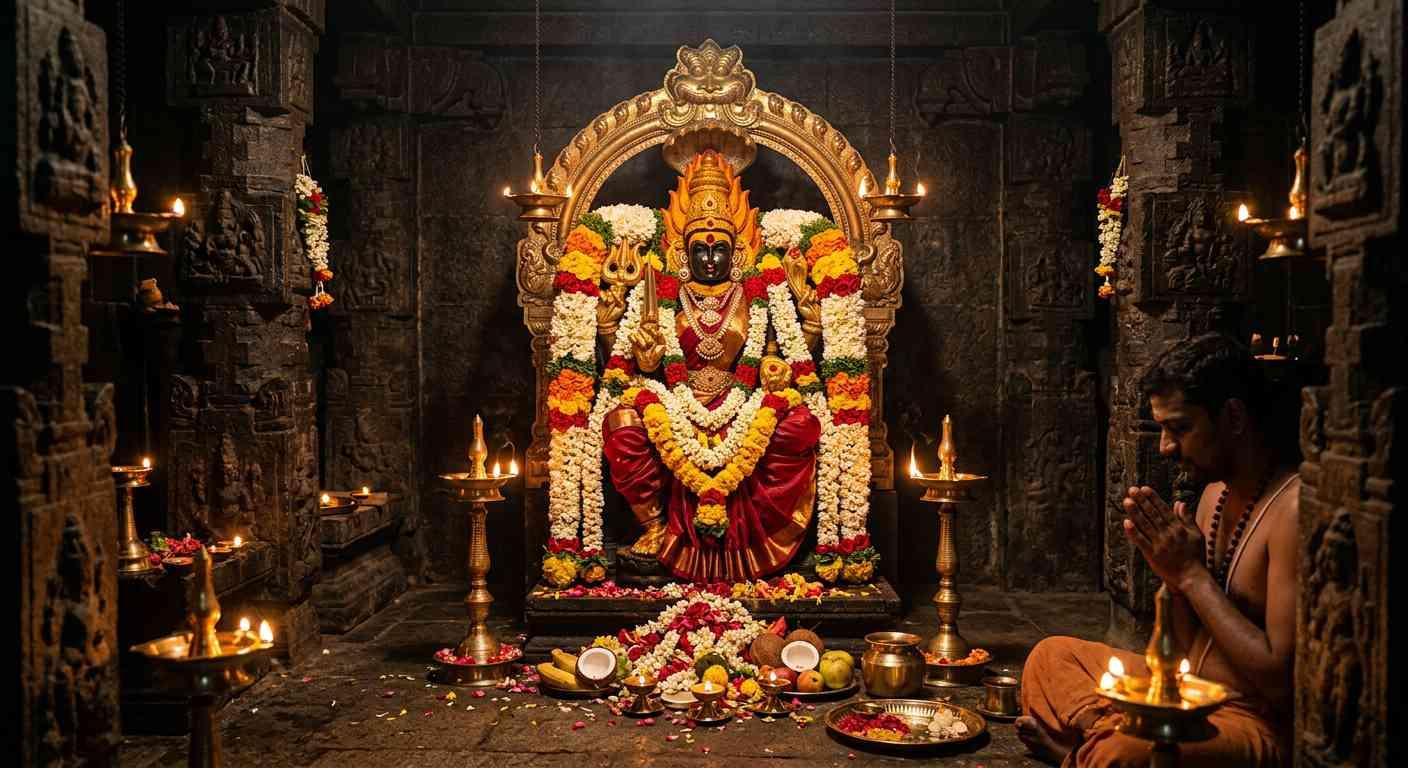
Arulmigu Kapaleeswarar
Ambal (Goddess)
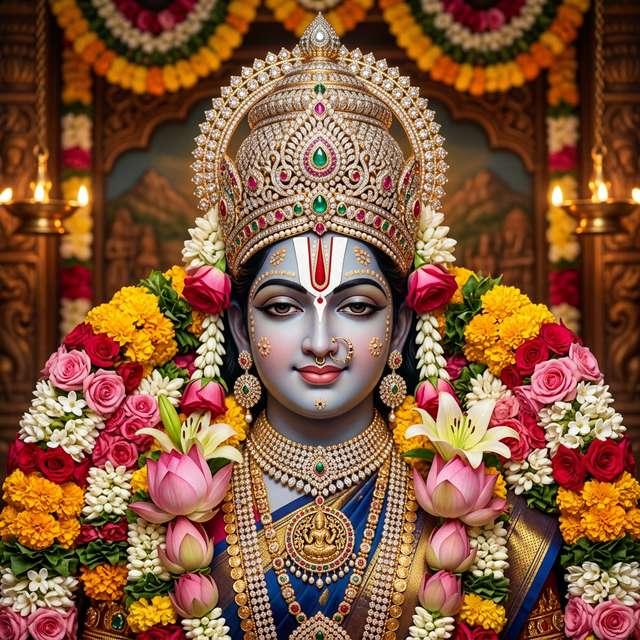
ARULMIGU KARPAGAMBAL
Timings
Opening Hours
05:30 AM to 12:30 PM04:00 PM to 09:30 PMOnly on Mahashivarathiri Temple will be opened 24 hrs ( 5.00A.M to next day 5.00A.M)
Pooja Timings
Ko Pooja (Flower and Kunkumam and Santhanam)
05:30 AM to 06:00 AM IST
Vaikarai Pooja (Abhishegam and Alangaram)
06:00 AM to 07:00 AM IST
Kalasandhi pooja (Abhishegam and Alangaram)
08:00 AM to 09:30 PM IST
Uchikkala Pooja (Abhishegam and Alangaram)
11:00 AM to 12:30 PM IST
Sayaraksha Pooja (Evening) (Abishegam and Alangaram)
04:00 PM to 06:30 PM IST
Ushakala poojai
06:30 PM to 07:00 PM IST
Ardhajama Pooja (Abhishegam and Alangaram)
09:00 PM to 09:30 PM IST
Address & Contact
Address
—
Village: Mylapore (Part 1)
Phone
Historical Information
Padal Pettrathu
Thiruganasambanthar
Sthala Virutcham
Punnai Tree
Vimana Type
Moondru Nilai Vimanam
Sanctorum Shape
Square Shape
King's Period
Pallavan
Temple Specialty
Purathanam
The eighth day is an important one. It is the Arupathu Moovar festival. The sixty three saints of Shiva are honoured. On this day Sambandar rises on the West Mada Street and he is given a special abhishegam along with Sivanesar. In the afternoon, both return to the temple with ashes of Poompavai. Sambandar composes seven verses to resurrect the dead Poompavai. Each verse describes one festival of Kapali temple. Poompavai Pathigam also accounts Mayilai to be a flourishing settlement with groves and impressive buildings occupied by pious people. In the days of Sambandar, Siva came out in procession with his eighteen bhootas who are his attendants. On Arupattu Moover day, Siva comes out with his 63 saints, all of them preceding him in palanquins with their faces turned to Shiva, their palms pressed together in adulation. The added attraction of this festival is that deities from other temples join the pageant. Nearly two to three lakh people visit Mylapore on that day. Philanthropic organizations, individuals, traders, institutions arrange for free food and water in abundance. It is a day when every visitor gets a free lunch and dinner. One interesting incident which happened in the early 20th century is recorded in a web site. A unique song associated with Arupattu Moovar festival is the Vazhinadi Chindu written by an unknown poet. The song is about a beau of George Town asking his girlfriend, a toast of Mullah Sahib Street to walk down with him to Mylapore to see the Arubattu Moovar festival at Kapaleeswarar temple. The composition is structured as though the hero is showing the sights of the city to his beloved as they travel to Mylapore. The route sited in the poem is the shortest and logical. In the night, the Lord comes on horseback (Pari vettai) and returns to the temple after receiving all poojas.
Historical
The shrine has a legend behind it. The shrine of Singaravelar in Kapali Temple is unique. Lord Murugar took a bath here and made offerings to Parvathi and Parameshwarar. Both appeared before Murgar in this temple and gave Sakthi Vel. Murugar used Vel (a spear) to defeat all the evil forces of Soorapadman. The demon knew that he would be killed, so he transformed himself into a mango tree. Murgar hurled the Vel and split the tree into two halves. One becoming Seval (a rooster) and the other becoming Mayil (a peacock), the vehicle. One more rooster became the emblem of his battle flag. Thereafter, Murugar married Devasena and Valli. Here is the verse that gives this incident in a tiny doggerel: Eththalathin yelaru sathiver Petri yathular payaruku ena naam Vetri petra singara velavan Nootra naam muyarthi thantha thalam (The verse explains how Lord Murgar got the title of Singaravelar. The Singaravelar shrine is situated in a 64 square meter area. The shrine, which faces west, houses the images of Singaravelavar, Valli, and Devasena. Here Singaravelar sits on peacock, and his spouses on elephants. This is very unique in the world. Here, Singaravelar appears as Shanmugar. A separate flag post is in front of the sannadhi.
Prayer
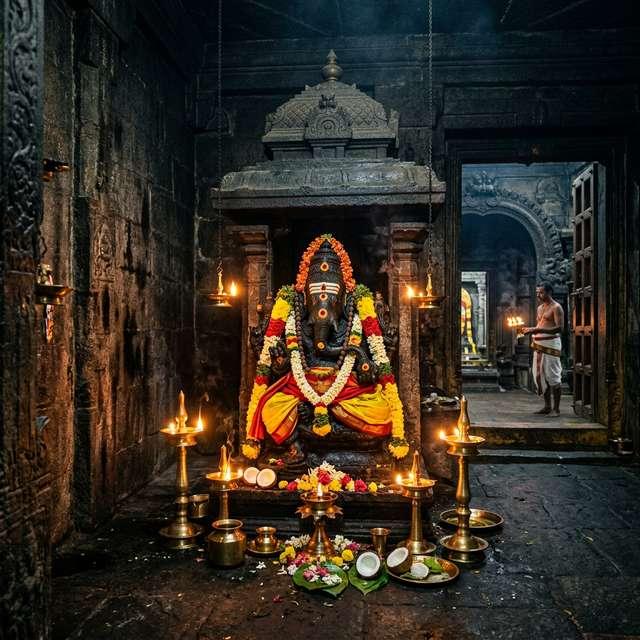
The ritual within this temple tends to be orthodox and elaborate in both Sanskrit and Tamil language. Apart from regular pujas, Shiva abhishekam is performed six times a day. The abhishekam is performed to Lingam representing his manifestation as creator of good. The items in the abhishekam are curd, milk, honey, tender coconut water, vibhuthy, bananas, sandalwood paste and ghee. The temple rituals are performed six times a day. Each ritual comprises four steps: abhishekam (sacred bath), alangaram (decoration) neivethiayam (food offering) and deepa aradhana (waving of lamps) for both Kapaleeswarar and Karpagambal. The worship is held amidst music by Nadeswaram (pipe instrument and tavil (percussion instrument). The priest recites loudly the appropriate mantra during the rituals. Daily rituals commences at 5:30 with palliarai puja. The Go Pujai is done first. Vila pujai muthar kalams.8:30 kalasandhi puja in small shrines. 11 am ouchi kalam 12:30 close. Evening 4 pm opening, 4 15 abhishegam, and 5 PM deeparathanai. Procession of pradosha nayar and offer of rice as pali. 7 pm second kala puja 9 pm artha jama puja. Only Lord Kapali gets milk and panneer abhishegam and deeparadhanai. Paliarai swami procession. Concluding puja is for Kala Bairavar.
Services
Thiruppani
2017-2018 THERE IS NO DETAILS ABOUT THIRUPANI DONATIONS
Donation
Donations are accepted in the form of cash (Indian as well as foreign currencies) money orders, Postal orders, ATM, Net Banking Services, all debit/credit cards through payment gateway, Crossed and A/c Payee Cheques or Demand Drafts, and also in the form of kind donations i.e. article and commodities etc. The amount of donation is used for the daily administration of the Temple to fulfill the requirements like accommodation, food etc. of the pilgrims, to supply the medical services to the poor and needy.
Annadhanam
The Best Donation is Food Donation one Who Gives food,gives Life. The Annadanam scheme, which was started in 2002 On March 23 at the Kapaleeswarar Temple. Every day nearly 150 persons will be served meals at this temple by noon. One day annadhanam will be Provided for Rs.5250/-, Friday, Saturday and sunday for 200 persons Rs. 7000/- Fixed Deposit Rs.100000/- Nearly 150 to 200 people are served food in the afternoon every day. Those who want to give alms There is income tax exemption (12G) for those who donate alms. Those who wish to donate for the charity can do so through the website (https://mylaikapaleeswarar.hrce.tn.gov.in) Annadhanam Bank Account No.456956591 Bank Branch - Indian Bank, Mylapore, Chennai-4.
Facilities
Golden Chariot
GOLDEN CHARIOT The beautiful golden chariot bedecked with bells , flowers and jewels can be taken out in procession round the temple. It is a divine experience to see the God and Goddess riding in the golden chariot accompanied by devotees.(Time evening 7.30 p.m. to 8.00 p.m.)
Drinking Water R.O.
In this temple, drinking water facilities have been installed in two places inside the temple.
Wheel Chair
There are 5 wheel chairs at the entrance of the temple for disabled persons to have Dharshan.
Bath Room Facility
Outside the temple, two toilets for men and two toilets for women have been set up separately near the Rajagopuram.
Solar Power System
Solar Light - 25 watts it has started in 16-5-2022, low maintainence and highly power consumed.
Marriage Hall
A/M. Kapaleeswarar Karpagambal Kalyana Mandapam No.1,Pasumpon Muthu Ramalingam Road,R.A.Puram, Chennai-600028. Wedding hall fully Air conditioned available for Marriages and other functions with sitting capacity of 1000 Nos, Dining Hall with 500 sitting capacity, and VIP Dining Hall 80 Nos capacity, 12 A.C . Rooms and BRIDE Room and BRIDE GROOM Room. Modified kitchen with all Amineties 15 persons Lift - Two and 6 persons lift - one and wallet car parking available. Vegetarian only, Booking for Hindus only.
Library Facility
Kapaleeswarar Temple Library. The library is located close to the temple in the Ponnamabala Vadiyar Street. It has unique collection of over 2000 Tamil books. The library is open for public. Newspapers and periodicals are provided for the local residents. The library has some rare reference book on ancient Tamil, Thirumurai and temple architecture. Students and professors come to the library refer to yoga and meditation related books. A book on Silpa Sasthiram is the most sought after book in the library. Apart from Thirukural and Thrumarikal, the library has a very rare collection of Sivagnana potha vilakam and Irupaveupathu. This is the small but best library for spiritual persons.
Solid Waste Management
The temple has provided large vessels ( Kalankal) for converting natural and food left over, leaves, dried flowers, fruits, etc which are used for preparing natural organic manure. This is used in the garden located in the temple and for the sacred tree (thala virutcham) of the temple. The temple also sells the natural manure prepared internally in small quantities in packets to the public at a reasonable price.
Biogas
Kapaleeswarar temple has set up a bench mark in solid waste management. The daily generated waste products like dried leaves and flowers, fruits and cow dung are fed into a bio gas plant to produce bio gas. The Gosalai of the temple provides 150 litres of cow dung which is fed into two large gas chambers with sufficient quantity of water. This turn produces bio gas which is stored and distributed through pipe lines to the kitchen preparing food for Annadhanam. This internal facility to generate gas has resulted in enormous cost saving as the purchase of commercial gas has considerably come down. The bio gas plant in Kapali Temple was completed with the financial assistance of both ITC Corporation and Exnora Green Pammal Philanthropic organisation, Chennai.
Tank Information
KAPALI THEERTHAM: The holy water in the tank is known as KAPALI THEERTHAM This biggest holy tank is situated between Ramakrishna Road and this temple covered four sides and having Neerazhi Mandapam is in the center of the holy tank. Three days float festivals conducted once in every year. The sacred tank is located on the west side of the temple adding a scenic view of the temple from the three Mada streets. At night the four Mada (east, west, north, and south) streets look stunningly beautiful with bright lights from the shops which are always busy with the local shopping crowd. The reflection of the light in the waters of the tank is also striking.
A neerazhi mandapam in the middle adds beauty to the tank. The water in the tank is holy and called ldquoKapali Thirtham (water). Many devotees call it, Sakthi Gangai and Mukthi Theertham. The tank is also called Thamarai thadagam, as it had abundant lotus creepers with blooming and colourful lotus in the early days. The tank is 629 feet in length and 475 feet in breadth.
The tank has a 40 sq meter mandapam on the Westside and accommodates the Iyoshta Devi also known as Moodevi. Historians say that the statue belongs to the 7th century B.C. On the northwest corner lies the small Munrugal Mandapam which is presumed to belong to the Muslim Community. The south side mandapam is known as Gnanapal. On the festival day of Arupathu moovar, a holy bath (abishekam) is given in the west side mandapam, for Sivanesa Chettiar and Sambandar. According to writer L.Kalayanasundaram, the tank appears older than the temple. The book Thirumaylai endorses that the tank was built by one Muthiah Mudaliar. Pon Kovilum mathilum pundarika poothadamum Nesamdanae amaithu neetham pesum Anbin pori seiyum Muthiappan ( With fondness, friendliness, love and devotion Muthappan built the boundary wall, d the flower garden which is being applauded every day) The temple was built in the 16th century.
The construction of temple steps commenced in 1910 and completed in 1926. Like the Kapali temple, the revered tank has many interesting legendary tales. King of Kalingadesam had a son called Sambhavan. He committed all atrocities and sins. He came to Kapali temple in the month of Panguni and took a dip in the tank and repented for what he had done and appealed to Kapali for forgiveness. He was forgiven and attained moksha.
Sculpture Details
Lord Krishna, SIVASURYAN, Siddhar, Saraswathi, Mahishasuramandini
Sacred Verses
poompaavai thirupathigam